Marketing para Educação: O Guia Definitivo para Atrair e Engajar no Setor Bilionário
O setor global de educação, projetado para atingir impressionantes US$ 10 trilhões em valor até 2030, enfrenta uma era de intensa competitividade impulsionada pelo avanço da tecnologia e o crescimento em mercados emergentes. Nesse cenário, instituições de ensino, empresas de EdTech e centros de treinamento necessitam urgentemente de estratégias de marketing digital sofisticadas para se diferenciarem, alcançarem públicos-alvo multifacetados e garantirem a captação e retenção de estudantes em um ambiente cada vez mais online.
Atualizado em 25 de maio de 2024 • Leitura estimada: 12 minutos
Resumo rápido
- O setor educacional global atingirá US$ 10 trilhões até 2030, tornando o marketing digital indispensável para a relevância e competitividade.
- O marketing para educação deve abordar quatro públicos-chave (alunos, pais, orientadores e compradores B2B) com mensagens altamente personalizadas.
- Estratégias digitais como SEO local, anúncios pagos e mídias sociais são cruciais para impulsionar matrículas e engajamento.
O que aconteceu
O cenário educacional global está em plena efervescência, com projeções indicando que o valor do setor alcançará a marca de 10 trilhões de dólares até o ano de 2030. Esse crescimento exponencial é impulsionado tanto pela expansão em mercados em desenvolvimento quanto pela evolução sem precedentes da tecnologia educacional (EdTech). Essas forças combinadas resultam em um ambiente de alta competitividade, onde o diferencial é a capacidade de se conectar efetivamente com o público. A maneira como estudantes e pais pesquisam instituições de ensino mudou drasticamente, migrando massivamente para o ambiente online. Nesse contexto, o marketing digital emerge como a espinha dorsal para qualquer negócio ou cliente na área educacional que almeja se destacar.
O marketing educacional envolve um conjunto estratégico de ferramentas e abordagens que escolas, universidades, empresas de EdTech e centros de treinamento utilizam para promover seus cursos e serviços na internet. É uma metodologia multifacetada que abrange desde a otimização para mecanismos de busca (SEO) para aumentar a visibilidade orgânica, passando por campanhas de publicidade paga (PPC) em plataformas como Google e Bing, até o engajamento ativo em mídias sociais para construir uma comunidade e uma percepção positiva da marca. A criação de conteúdo relevante e valioso, como blogs e vídeos que abordam as dores e dúvidas do público, também é um pilar fundamental. Em um mundo onde a decisão sobre a educação é cada vez mais complexa e digital, essas estratégias não são apenas um diferencial, mas uma necessidade premente para o sucesso.
Ponto-chave
A era digital redefiniu a jornada do estudante: o marketing educacional de sucesso hoje exige uma abordagem holística, focada na construção de confiança, na personalização para múltiplos públicos e na mensuração contínua de resultados, transformando o vasto cenário online em um ecossistema fértil para a captação.
Por que isso importa
A relevância do marketing digital para o setor educacional é inegável, pois o público-alvo — sejam estudantes, pais ou profissionais — recorre massivamente à internet para pesquisar suas opções antes de tomar decisões significativas. Estudos revelam que, ao buscar oportunidades de ensino superior, impressionantes 63% dos estudantes iniciam suas pesquisas em mecanismos de busca tradicionais, e 60% utilizam plataformas de mídia social. Essa tendência não se restringe apenas ao ensino superior; desde distritos escolares em busca de softwares a pais procurando creches, a jornada de pesquisa começa online. O marketing digital, portanto, simplifica esse processo, entregando a informação correta no momento certo.
Instituições de ensino que investem estrategicamente em marketing digital colhem diversos benefícios cruciais. Primeiramente, conseguem construir autoridade de marca, estabelecendo-se como opções confiáveis e de alta credibilidade através de uma reputação online consistente. Em segundo lugar, potencializam o engajamento, conectando-se com seus públicos onde eles estão, por meio de conteúdo significativo e interativo. Por fim, e talvez o mais importante, impulsionam as conversões, transformando inquéritos em matrículas efetivas. Uma campanha digital eficaz garante que a instituição permaneça na mente de seu público-alvo, destacando seus pontos fortes e guiando-os em direção à decisão de se matricular ou adquirir um serviço. A capacidade de segmentar, personalizar e analisar dados faz do marketing digital uma ferramenta indispensável para o crescimento e a sustentabilidade no competitivo mercado educacional.
Impactos práticos
Para empresas
Empresas e instituições educacionais precisam reavaliar suas estratégias de captação, focando na personalização da jornada do cliente. A oportunidade reside em criar funis de nutrição de longo prazo, considerando que o ciclo de decisão pode durar meses. A agilidade em adaptar a comunicação para cada perfil de público (estudantes, pais, orientadores, compradores B2B) é vital, e aquelas que investirem em SEO local, publicidade paga e automação de marketing verão um aumento significativo em suas matrículas e receita.
Para consumidores
O público final se beneficia de um acesso mais rico e transparente à informação. Pais e estudantes podem comparar opções, ler avaliações e interagir com as instituições de forma mais profunda antes de uma decisão. Isso aumenta a confiança e a conveniência, mas também exige que o consumidor seja mais criterioso na análise das informações online, buscando autenticidade e credibilidade nas narrativas das instituições. A experiência de busca e escolha se torna mais rica e multifacetada.
Para o mercado
O mercado educacional se torna mais competitivo e dinâmico, com um forte incentivo à inovação em plataformas e metodologias de ensino. Haverá uma consolidação de empresas que dominam o marketing digital e uma pressão para que as demais se adaptem rapidamente. A regulamentação pode evoluir para garantir a ética na publicidade educacional, e a demanda por ferramentas de análise de dados e automação de marketing se intensificará. A busca por parcerias estratégicas com agências especializadas também será uma tendência crescente.
O cenário daqui para frente
O futuro do marketing educacional será marcado pela personalização extrema e pela inteligência artificial. A tendência é que as instituições utilizem dados para criar jornadas de comunicação únicas para cada potencial aluno, desde o primeiro contato até a matrícula e além. Veremos o crescimento de plataformas de micro-learning, gamificação e realidade virtual sendo promovidas por campanhas digitais cada vez mais imersivas. A integração entre canais online e offline será aprimorada, criando uma experiência fluida para o usuário. A sustentabilidade e o propósito social das instituições também ganharão destaque nas mensagens de marketing, ressoando com a nova geração de estudantes e suas famílias.
A transformação digital continuará a moldar o comportamento de consumo na educação, exigindo que as estratégias empresariais sejam flexíveis e data-driven. A inovação em formatos de conteúdo, como vídeos curtos e podcasts, será fundamental para manter o engajamento. As instituições que se anteciparem a essas mudanças, investindo em tecnologia e na capacitação de suas equipes de marketing, estarão à frente na corrida pela captação. Aqueles que entenderem o marketing educacional como um ciclo contínuo de escuta, adaptação e otimização, e não como uma campanha pontual, serão os grandes vencedores.
O que observar agora
- Monitore a evolução das ferramentas de IA para personalização de conteúdo e automação de marketing, pois elas revolucionarão a segmentação e a eficiência.
- Observe as plataformas de mídia social preferidas pelas gerações mais jovens (TikTok, YouTube Shorts) e como as instituições adaptam seu conteúdo para esses canais efêmeros e visuais.
- Acompanhe o investimento em SEO local, pois a relevância geográfica continua sendo um fator decisivo na escolha de escolas e universidades, especialmente para cursos presenciais.
Perguntas frequentes
Como desenvolver uma estratégia de marketing para ensino superior?
Inicie segmentando a audiência (alunos, pais, orientadores, compradores B2B) e mapeie canais e conteúdo para cada um. É crucial alinhar as estratégias digitais aos objetivos institucionais gerais, evitando tratá-las como iniciativas isoladas, para garantir coerência e eficácia.
Anúncios digitais funcionam no marketing educacional?
Sim, anúncios digitais são eficazes quando atrelados a metas específicas de matrícula, não apenas métricas de vaidade. O segredo é escolher a plataforma onde seu público realmente está, configurando o rastreamento de conversão antes de investir qualquer quantia, para otimizar o ROI.
Como mensurar o sucesso no marketing educacional?
Comece rastreando o desempenho por canal (impressões, CTR, custo por lead, taxas de conversão por campanha). Adicione dados de comportamento (taxas de rejeição, abandono de formulários) para identificar gargalos. Avalie em um ritmo constante para corrigir estratégias rapidamente, em vez de esperar o ciclo de matrículas para ver os resultados.
Key Takeaways
- The global education sector is expected to reach $10 trillion in value by 2030, making digital marketing essential for standing out in this competitive industry.
- Digital marketing in higher education means reaching four distinct audiences (students, parents, counselors, and B2B tech buyers) with messaging tailored to what they actually care about.
- Education marketing requires a unique approach due to trust-building, long decision cycles, and diverse audiences.
- Proven strategies like local SEO, paid advertising, and social media engagement can drive enrollment and engagement.
- The right tools, data-driven insights, and experienced agency support drive sustainable growth and measurable return on investment (ROI).
The global education sector is set to reach $10 trillion in value by 2030, powered by growth in developing markets as well as education technology reaching new heights. Both of those factors add up to a lot of competition out there for your education business or clients.
Compounding that is the fact that the way students and parents search for schools has changed. With a growing online audience and competition from all angles, institutions need to stand out, and digital marketing is how they’ll do it.
In this guide, we’re diving deep into the strategies that work, the challenges and common mistakes you might face, and how to conquer them like a pro.
What Is Education Marketing?
Digital marketing for education encompasses the strategies and tools used by schools, universities, edtech companies, training centers, and any other business in the niche to promote their offerings online. It’s a multifaceted approach that includes:
- Search engine optimization (SEO) for visibility: Building a well-optimized site puts your institution at the top of search results for relevant queries.
- Pay-per-click (PPC) campaigns: Buying PPC campaigns enables you to focus on more targeted traffic on conventional search engines like Google and Bing, social media, connected TV devices, or even in apps.
- Social media engagement: Building meaningful connections with audiences on popular social media platforms gives you a chance to both improve your perception and draw in potential leads.
- Content marketing: Creating value-driven content, such as blogs and videos, that address your audience’s pain points.
Why Digital Marketing Matters for Education
The education sector’s target audience (students, parents, and professionals) turns to the web to research options before making decisions. One study showed that when looking into higher education opportunities, 63 percent of students start their research on traditional search engines, and 60 percent used popular social media platforms.
This applies across education, though. A school district shopping for software and new parents shopping for a daycare will both start online.
Digital marketing simplifies this process by delivering the right information at the right time. Educational institutions that invest in digital marketing can:
- Build brand authority: A consistent online reputation helps establish your business as a trustworthy and reliable option.
- Enhance engagement: Digital marketing campaigns help your team connect with audiences where they are through meaningful and interactive content.
- Boost conversions: Data-driven campaigns showing the value of your offerings will help convert inquiries into enrollments.
An effective digital campaign ensures that your business stays top of mind with your target audience, showing what you do best and moving them to a conversion.
What Makes Education Marketing Different
Marketing in the education sector presents unique challenges and opportunities. Here’s what sets it apart:
- Building Trust: Prospective students and parents alike are going to be concerned about the quality and credibility of institutions. The same applies to education technology (edtech) or other branches of the industry. Trust-building will be essential given the substantial investments in education.
- Long Decision Cycles: Customer decisions often involve months of research and multiple touchpoints. You need to build campaigns that can retain value during the entire cycle.
- Localized Marketing: An education marketing strategy tailored to the community where a specific school or business operates will perform much better than a broad, one-size-fits-all approach.
- Storytelling: A student’s educational experience is often an emotional journey for them, as well as their parents and teachers. Painting the picture of the role your school or business plays in that journey is critical for business conversions.
- Complex Stakeholders: Education marketing has to cater to students, parents, sponsors, and counselors simultaneously. Building out segments and personalized campaigns for each group is key to success.
Education Marketing Channels
No single channel carries an entire education marketing program on its own. The schools and edtech brands seeing the strongest results run a mix, meeting different audiences at different points in a decision cycle that can stretch on for months.
Below, I’ve broken down the four channels that consistently drive results in marketing for education. Each plays a specific role, and the smartest programs coordinate them to account for each customer’s unique buyer journey.
SEO and Local Search
Local SEO matters more in education than in most industries because most students and parents are searching for schools or programs nearby. That means researching location-based keywords and showing up in local search results is disproportionately important to your education marketing strategy compared to other channels.
Start by optimizing your education website for location-based keywords, like “top private schools in [city].”
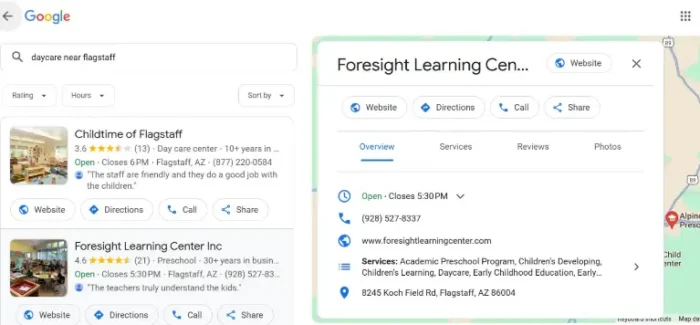
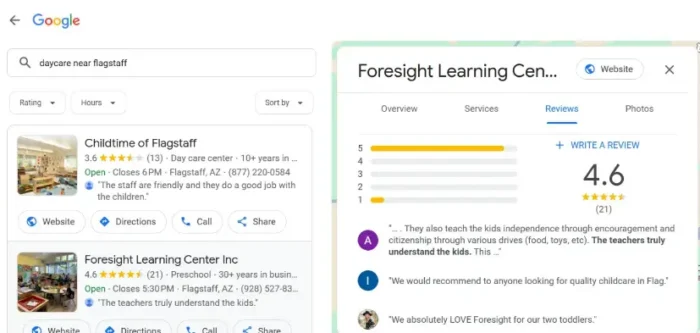
The next step is to claim and optimize your Google Business profile. These screenshots show how helpful a fully optimized Google Business Profile can be for appearing in local search results and map packs.
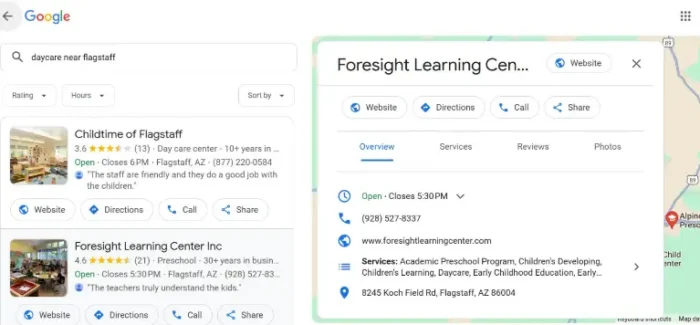
Finally, encourage current students and alums to leave positive reviews. Customers will look at these reviews during their research, and positive testimonials can make or break their decision.
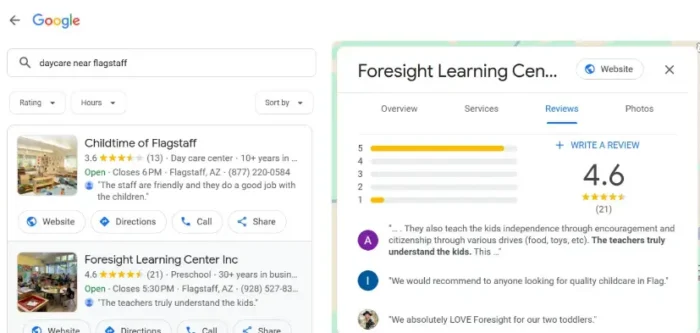
Additionally, focus on creating locally relevant content. Think about blogs or videos like “5 Reasons Why [City] Is Perfect for Higher Education.” Pair this with local backlinks from community websites to boost your authority.
Paid Media
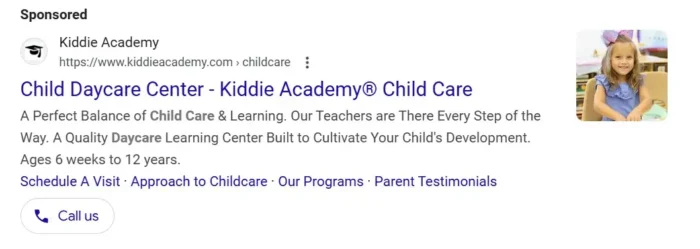
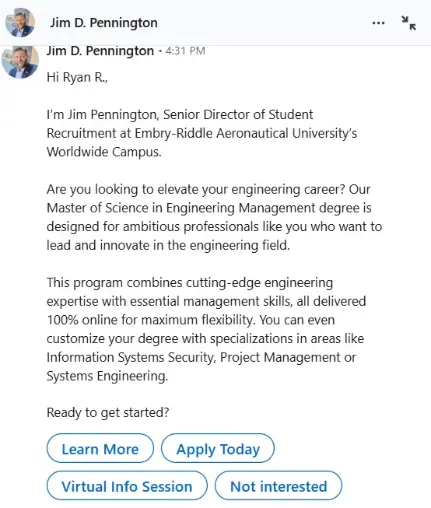
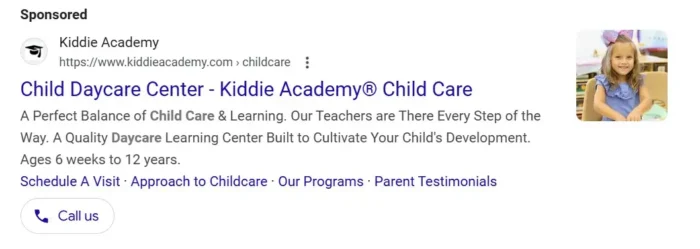
When done right, reaching students with paid media can provide immediate visibility for your business. Platforms like Google Ads allow you to target users actively searching for terms like “daycare near me,” and show them one of your ads (like the one below) at the very top of the search engine results pages (SERPs).
Social media ads, on the other hand, let you narrow down your audience based on age, interests, and even behavior. For example, LinkedIn might be more effective for professional development, while TikTok can help target younger audiences considering colleges.
Paid marketing is expanding into exciting new areas, though. Emerging paid media trends like gaming networks, digital out-of-home (DOOH) ads, connected TV (CTV) ads, and podcasting offer new ways for you to get in front of specific audiences instantly.
Targeting is only part of paid media success, though. Always A/B test your ads to find the best-performing creatives and copy, and get that maximum ROI.
Content and Social Media
Education’s long decision cycle rewards comprehensive content, which gives you the opportunity to address real research questions through detailed blog posts with an FAQ section, or multimedia content like infographics and videos. Prioritize depth over volume, and these can be some of your best-performing marketing assets. Also, be sure to optimize everything for SEO while maintaining high readability.
Educational webinars or downloadable e-books, such as this guide from Gallup, can also capture leads.

Source: https://www.gallup.com/analytics/644939/state-of-higher-education.aspx
Content is a great tool for providing information and establishing authority, but trust and credibility are also essential parts of success in the world of education marketing. This is where social proof can be invaluable.
Social proof uses the experiences and words of others to build a better impression for your business. Testimonial videos, like the one below, do a great job of humanizing the education experience at a particular school. They help the parents of potential students see their child attending as they relate to people just like themselves telling their child’s story.
Showcase these prominently on your website and social channels. For example, a video interview with a recent graduate who landed their dream job because of your program can have a huge impact.
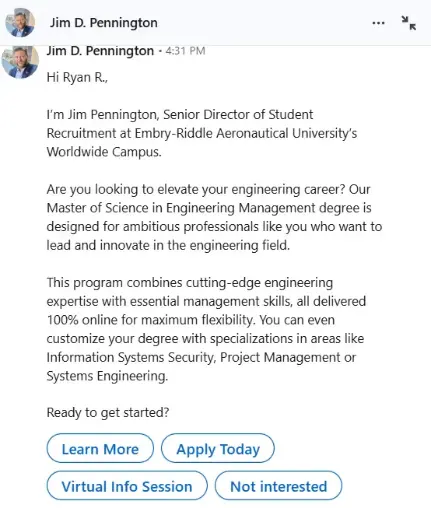
Don’t overlook platforms like LinkedIn for professional programs. Encourage alums to endorse your institution or share their success stories publicly.
Email and Marketing Automation
Email marketing has one of the best ROIs of all digital marketing techniques, helping deliver value and promote your services. You can maximize those numbers by supporting your campaigns with marketing automation.
Educational institutions and businesses often handle many inquiries, applications, and follow-ups. Marketing automation tools like HubSpot or ActiveCampaign can streamline this process. Automate email sequences for application deadlines, event reminders, or onboarding new leads.
For example, when someone downloads your guide on “How to Choose a College,” an automated series can nurture them toward booking a campus visit. Personalization is key here. Use dynamic fields in your emails to address recipients by name or tailor content to their specific interests.
Understanding Your Education Marketing Audience
Educational purchasing decisions are not to be taken lightly. Part of the long decision cycle I alluded to earlier comes down to the amount of trust necessary to get stakeholders to move forward. That holds whether it’s students choosing universities or B2B organizations choosing edtech software.
During the buying cycle, trust is achieved by marketing that resonates with each of the following audiences:
- Prospective students: According to a Pew Research study, nearly half of US teens are online “almost constantly,” with YouTube and TikTok among the platforms they use most. Meet them on those platforms with short-form, student-voiced content that resonates. Avoid the stuffy, institutional messaging.
- Parents and families: Parents carry decision weight because they carry financial weight, with 74 percent of families relying on parent income and savings to help pay. Give parents dedicated content on the financial details and post-graduation outcomes. Content that assures them their kids will be safe also helps here.
- School administrators or counselors: Students put a lot of trust in their school counselors. In fact, 49 percent of students rely on high school counselors when deciding where to go to college, second only to parents at 72 percent. Give counselors shareable resources (program one-sheets, application timelines, and financial aid guides) they can hand off without extra work.
- B2B edtech and training buyers: K-12 procurement is a crowded, cautious space. The EdTech Quality Collaborative reports that the average district has access to nearly 3,000 distinct edtech products in a school year, with roughly 65 percent of purchased licenses going unused. To stand out, your education marketing strategy has to communicate real value to each member of your target organization’s buying committee. Design campaigns that speak to each one accordingly.
Education Marketing Strategy: Tips That Work
Assuming your audience foundations are in place, the next question becomes: how do we convert leads into customers?
You never know which asset or touchpoint will convert, so I’m outlining these strategies to help you stay ready at all times.
Running webinars or podcasts and working with influencers are great ways to stay top of mind as your customer moves through their buyer journey. Optimizing for mobile is essential to capture most of today’s web-browsing traffic and keep them on your landing page. Finally, retargeting and tracking your metrics are two strategies that ensure you get the most out of your marketing dollars.
I’ll show you how they all work.
Optimize for Mobile
Over 64% of web traffic comes from mobile devices, and for younger audiences, that number is even higher. Your website needs to be responsive, fast-loading, and easy to navigate on smaller screens.
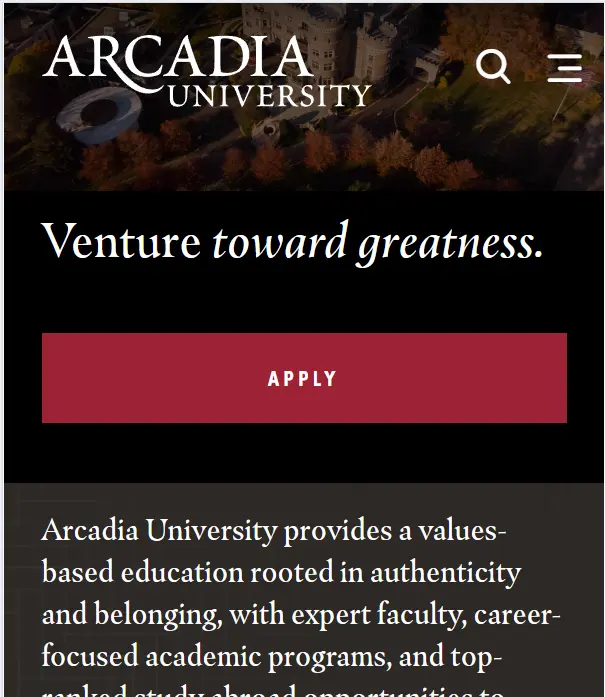
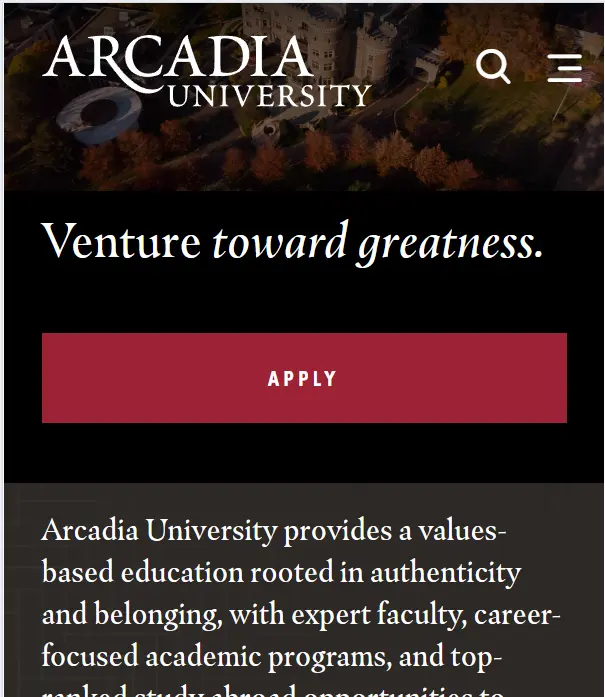
Mobile SEO doesn’t just mean technical design and keyword optimization; your content should also be skimmable with clear calls to action. See the example from Arcadia University below:
Source: https://www.arcadia.edu/
Google’s mobile-first indexing also means that your mobile site’s performance directly impacts your rankings. Test your site regularly with Google PageSpeed Insights and other tools to ensure it delivers a seamless experience across devices.
Track and Analyze Metrics
What gets measured gets improved. Tools like Ubersuggest, Google Analytics, and HubSpot can provide insights into what’s working and what isn’t. Track metrics such as traffic, bounce rate, and conversion rate. Diving deeper into user behavior can also help you identify drop-off points in your enrollment funnel.
Use these insights to continuously refine your campaigns and avoid some of the common mistakes we’ll discuss later, such as testing different headlines to avoid your landing page having a high bounce rate.
Collaborate With Influencers
Influencers aren’t just for fashion or food brands; they’re becoming increasingly important in education marketing. Partner with educational influencers or niche content creators to reach your audience authentically. For instance, a popular YouTuber who reviews online learning platforms could endorse your program.
Look for influencers who align with your values and audience. Micro-influencers (those with smaller but highly engaged followings) often deliver better ROI than celebrity endorsements.
Run Webinars, Podcasts, and Virtual Events
Webinars are powerful tools for education marketing. They allow you to showcase your programs and interact with potential students, all while answering questions in real time. Topics like “Preparing for College Admissions” or “How to Introduce Your Child to STEM” can draw significant interest. Make sure that you’re picking the format that works best for your target audience, though.
For example, the EdSurge podcast focuses on education technology, innovative practices in education, and critical issues affecting educators, institutions, and students.

Source: https://www.edsurge.com/coverage-areas/edsurge-podcast
Use platforms like Zoom or Google Meet and promote your events through email and social media. Post-event, repurpose the recording as gated content to generate more leads.
Develop Retargeting Campaigns
Retargeting campaigns show tailored ads to users who’ve already interacted with your site. For example, someone who viewed your “Admissions” page might see an ad offering a free consultation with an advisor.
You can make retargeting more effective by using personalized messaging and dynamic creatives to re-engage your prospects. Platforms like Google Display Network and Facebook make setting up retargeting ads simple.
Common Education Marketing Mistakes to Avoid
Education marketing, like campaigns for any other industry, can eventually hit pitfalls or bottlenecks. It’s easy to feel like you’re pulling all the right levers, but you’re not seeing any progress with leads or conversions. Most likely, you’ve run into one of the common marketing mistakes across the industry.
Here’s a quick list of what to look out for and how to fix them if they pop up:
- Treating enrollment like a short sales cycle. A prospect who doesn’t book a campus visit in week one hasn’t gone cold; they’re just deeper in a decision cycle that runs months.
- The fix: build long-tail nurture sequences that stay useful right through the enrollment window instead of dropping off after two emails.
- Ignoring mobile experience. With most of your traffic coming from phones (especially for younger audiences), and Google prioritizing mobile-first indexing, a slow or clunky mobile site loses prospects before they even see your program.
- The fix: audit your mobile site regularly and prioritize page speed and simple navigation over desktop-first design choices.
- Sending one message to every audience. All four of our target audiences mentioned above have different driving factors and ways you should speak to them.
- The fix: map content and campaigns to each segment separately (cost and outcomes for parents, culture for students, evidence and interoperability for institutional buyers).
- Underinvesting in local SEO. For most schools and campus-based programs, search demand is inherently local, and skipping Google Business Profile and location-based keywords leaves you behind the curve.
- The fix: treat local SEO as a foundational channel, not an afterthought.
- Not watching the funnel closely enough. A landing page with a rising bounce rate or a stuck conversion step will drain campaign spend for weeks if no one’s checking.
- The fix: review key metrics on a set cadence and test alternate creative or messaging the moment a drop-off appears.
How Education Marketing Agencies Can Help
Collaborating with an experienced education marketing agency can provide your institution with:
- Tailored Strategies: Agencies understand the nuances of the education sector and can provide marketing strategies for private schools or public schools, no matter what their goals might be.
- Advanced Tools: Gain access to premium tools for analytics, campaign management, and automation.
- Scalability: Agencies can launch specific strategies, like building local citations for your campus, that can boost your growth trajectory.
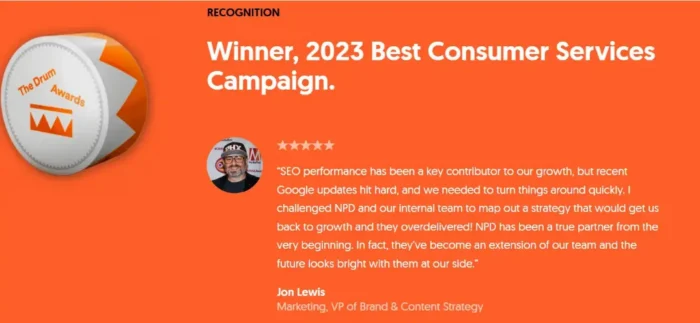
An NP Digital client, Universal Technical Institute (UTI), is a perfect example of what working with an agency can provide. Their team requested our support after losing traffic in the wake of a Google algorithm update. Here’s how the team was able to help:
- Improved Technical Site Health: Implemented strategies to enhance Core Web Vitals and increase visibility in featured snippets, ultimately improving the overall user experience.
- Content Optimization with the 6Rs Methodology: Conducted a detailed content audit and recommended changes to ensure all campus pages aligned with user search intent and Google updates.
- Local Content Expansion: Created 200+ new local pages targeting surrounding cities for each campus, containing optimized schema markup, rich media, and detailed localized content to capture new location-based queries.
- Leveraged Automation for Localization: Used ChatGPT and Google Sheets to target nearby cities and enhance the relevance of those pages by adding details like local landmarks and driving directions to campuses.
- Enhanced Local Authority: Improved Experience, Expertise, Authoritativeness, and Trustworthiness (E-E-A-T) signals and search rankings by building 400+ citations and backlinks on high-domain authority local sites, including Chambers of Commerce and local newspapers.
- Optimized Google Business Profiles: Ensured accurate information across all map-pack listings by updating profiles, removing duplicates, and maintaining control of local business data.
Results:
- A 50 percent increase in organic traffic was achieved within six months, driving more prospective students to the website.
- A 35 percent growth in enrollment inquiries.
- Enhanced ROI through optimized ad spending and data-backed decisions.
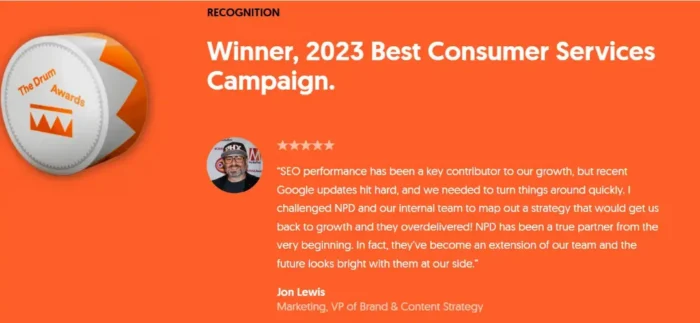
Agencies are great in terms of helping you scale up a marketing strategy quickly, though you ideally want to work with one that has a track record of clients in the education sector.
FAQs
How do you develop a higher education marketing strategy?
Start with the audience segments you need to reach (prospective students, parents, counselors, or institutional buyers), then map channels and content to each. Effective digital marketing for higher education ties everything back to overall institutional goals rather than treating channels as separate lanes.
Do digital ads work in education marketing?
Yes, when they’re tied to specific enrollment goals rather than vanity metrics. The trick is matching the platform to where your audience actually spends time and setting up conversion tracking before you spend a dollar.
How do you measure results in education marketing?
Track channel-level performance first: impressions, click-through rates, cost per lead, and conversion rates per campaign. Layer in behavior data (bounce rates, form drop-off) to spot funnel leaks. Reviewing on a set cadence lets you fix creative or targeting quickly, rather than waiting for enrollment cycles to reveal what didn’t work.
How do you measure education marketing success?
Tracking campaign metrics is an important part of measuring success, but only as far as they relate to your goals. Define what success looks like for your campaign, whether it’s an increase in enrollment or edtech purchases, then track attribution of conversions across the entire buyer journey, not just the last click. Given decision cycles that run months, evaluate over quarters or full recruitment cycles to allow for the appropriate timeframe.
{
“@context”: “https://schema.org”,
“@type”: “FAQPage”,
“mainEntity”: [
{
“@type”: “Question”,
“name”: “How do you develop a higher education marketing strategy? “,
“acceptedAnswer”: {
“@type”: “Answer”,
“text”: “
Start with the audience segments you need to reach (prospective students, parents, counselors, or institutional buyers), then map channels and content to each. Effective digital marketing for higher education ties everything back to overall institutional goals rather than treating channels as separate lanes.
”
}
}
, {
“@type”: “Question”,
“name”: “Do digital ads work in education marketing? “,
“acceptedAnswer”: {
“@type”: “Answer”,
“text”: “
Yes, when they’re tied to specific enrollment goals rather than vanity metrics. The trick is matching the platform to where your audience actually spends time and setting up conversion tracking before you spend a dollar.
”
}
}
, {
“@type”: “Question”,
“name”: “How do you measure results in education marketing?”,
“acceptedAnswer”: {
“@type”: “Answer”,
“text”: “
Track channel-level performance first: impressions, click-through rates, cost per lead, and conversion rates per campaign. Layer in behavior data (bounce rates, form drop-off) to spot funnel leaks. Reviewing on a set cadence lets you fix creative or targeting quickly, rather than waiting for enrollment cycles to reveal what didn’t work.
”
}
}
, {
“@type”: “Question”,
“name”: “How do you measure education marketing success?”,
“acceptedAnswer”: {
“@type”: “Answer”,
“text”: “
Tracking campaign metrics is an important part of measuring success, but only as far as they relate to your goals. Define what success looks like for your campaign, whether it’s an increase in enrollment or edtech purchases, then track attribution of conversions across the entire buyer journey, not just the last click. Given decision cycles that run months, evaluate over quarters or full recruitment cycles to allow for the appropriate timeframe.
”
}
}
]
}
Conclusion
Executar campanhas de marketing educacional que realmente se destaquem não é uma tarefa simples, mas é plenamente alcançável. Ao se conectar genuinamente com seu público, endereçar suas necessidades de forma autêntica e entregar valor real, você pode construir uma estratégia de marketing que gere resultados concretos e mensuráveis. Seu próximo passo é transformar o conhecimento adquirido aqui em ação. O desafio é escolher um dos canais ou segmentos de audiência abordados neste guia e testar uma tática específica. Ao obter os primeiros resultados, você poderá calibrar sua abordagem ou escalar a iniciativa.
E se, em algum momento, você se sentir estagnado ou precisar de um suporte especializado para navegar pelas complexidades do setor educacional, os serviços de marketing educacional da NP Digital estão à disposição para guiá-lo em qualquer obstáculo e ajudar sua organização a alcançar novos patamares.


Fonte: Neil Patel